Let’s Not Revamp Old Traps To Fall Into: Fraternal Call For Peace
By Girma Gutema (Abbaacabsaa)
The old trap is treacherous trap
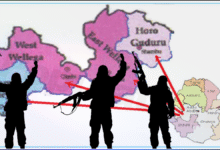
Controversies flared up fast following the recent decision of the leadership in the Somali Regional State government, as it introduced what it called ‘new restructung of administrative units’ including by creating new woredas in the border areas of Oromia. This is indeed wondering why the current leadership of the Somali Regional State wanted to revamp and fall into TPLF’s old trap. And of course, the decision of the regional state leadership is not of benefit for the people of the Somali region. But its negative consequences certainly affect those of us in Oromia and the Somali region too, as the spill-over effect of the bad decision may not have any predictably positive outcome.
For Oromia and Somali Regional States in the Ethiopian Federation, quarelling over pieces of land to demarcate their territories here and there makes no to little sense. But when and where such disputes arose, we got a track record of resolving them using peaceful political frameworks including through the wisdom of our elders’ moderations and using democratic mechanisms like referendum even during the TPLF/EPRDF era.
Facts and precedents
Having said this, let’s honestly state the facts and the precedents pertinent to the kebeles (local administrative units) which are now flaged as ‘disputed’ in the Ethiopian border town of Moyale.
After about a year following the establishment of the regional states and their boundaries in the early 1990s, ‘disputes’ were said to have risen on some kebeles in Moyale, including the urban kebeles of 01 & 02, on whether or not those kebeles be demarcated into Oromia or Somali Regional States. According to all verifiable sources, the said disputes arose due to massive population influx of ethnic Somalis and their settlements in those kebeles of boarder areas after the collapse of Ziad Bare’s regime in Somalia, just prior to the TPLF-led EPRDF regime came to power in Ethiopia.
Following this ‘demarcation dispute’ during the transitional period, Prime Minister Tamirat Layine’s office established a committee to study and recommend a resolution on the dispute. The established committee, which constituted delegates including from kilil-1 (Tigray), recommended that those Kebeles in Moyale be demarcated into Oromia. Some of the rural kebeles claimed by the settled refugees from Somalia include multiple water wells (Eela) that the Borena Oromo saw as sacred places for many centuries. A screen copy of the decision letter signed by PM Tamirat Layine seems to have had made its decision based on this fact.
But things turned up-down later on. After about a decade came yet another round of “claim” on those same kebeles in Moyale by the “Somali Regional State”—this being at the time when the TPLF regime had consolidated its power grip and control over the Ethiopian state, and its military Generals, the likes of Gebre Dila, General Quarter et al had established themselves in the lucrative contraband businesses in that part of the country while playing the dirty game of pitting the Oromos against the Somali communities living in that part of the country. And by the time this claim came, the security head of the Somali regional state was allegedly a former colonel in the Ziad Bare regime of Somalia, who would later recruit Abdi Illey, the former president, into the security structure of the Somali region in Ethiopia.
As a result, the TPLF dominated regime in Finfinne allowed a referendum on 463 kebeles in the boarder areas of Oromia and Somali regional states including on those “disputed” kebeles in Moyale in October 2004. According to the report produced by the Ethiopian electoral board, while a staggering 65.8% of the other “disputed” kebeles voted to be part of Oromia, votes for those in Moyale including the urban kebeles of 01 & 02 were officially cancelled. Meaning, the referendum plan on these kebeles had to be officially cancelled. And the reasons given were so laughable, to say the least. ‘Security reasons’ and ‘disagreements between the two regional administrations’ were the key reasons indicated in the final report of the then electoral board of Ethiopia to cancel the planned referendum in those kebeles in Moyale.
Fraternal call for peace
Now, given these historical facts, we wonder why the current leadership of the Somali Regional State wanted to revamp and fall into TPLF’s old trap. Does it want to detonate the destructive bombshell that the TPLF planted? Or it’s just implementing a new roadmap of this PP regime to stoke conflict between the brotherly Oromo and Somali peoples?
In this short commentary, our kindest appeal is for the current leadership in the Somali regional state not to fall into the old trap and fail us all by invoking bloody conflicts between our brotherly peoples. This is a fraternal call for peace. We also call upon everyone, especially activists and politicians from both regions, for calm and de-escalation of destructive rethorics on social and/or mainstream media platforms.
What’s more, we never imagined though that well regarded intellectuals-turned-politicians like President Mustafa Omer would fall into this old trap and fail us all, especially at this very difficult point in time for our brotherly peoples. We wonder why? Peace has no alternative!
Bio: Girma Gutema (Abbaacabsaa) is an independent researcher and human rights advocate. He is also a member of the opposition party OFC.